Your Gut and Brain Are in Constant Conversation
If you’ve ever felt “butterflies” before a big moment or lost your appetite under stress, you’ve experienced the gut-brain connection firsthand.
That’s not poetic language—it’s biology.
Your gut and brain are wired together through the vagus nerve, a bidirectional communication highway that constantly relays messages about your emotional and physical state.
The gut even produces neurotransmitters like serotonin, dopamine, and GABA—the same ones that regulate mood, focus, and drive.
In fact, about 90% of your body’s serotonin (the “feel good” chemical) is made in your gut.
So when your digestion is off, your mood and motivation usually are too.
The Science Behind the Gut-Brain Axis
Think of your gut as an ecosystem—one that communicates directly with your central nervous system. This relationship is now known as the gut-brain axis (GBA), and it’s reshaping how we understand mental and metabolic health.
Here’s how it works:
- Microbes → Neurochemistry
Your gut bacteria produce neurotransmitters and metabolites that influence brain function and emotional regulation.
Example: Short-chain fatty acids (SCFAs) produced from fiber fermentation help reduce inflammation and support healthy brain signaling.
- Inflammation → Mood
Poor gut health increases intestinal permeability (“leaky gut”), allowing inflammatory molecules to enter circulation. This can elevate cytokines that disrupt serotonin and dopamine balance—linked to fatigue, anxiety, and depression.
- Stress → Gut Function
High cortisol (stress hormone) slows digestion and decreases microbial diversity, creating a loop: stress hurts your gut, and a poor gut amplifies stress.
Common Signs Your Gut-Brain Axis is Out of Balance
- Constant brain fog or sluggish thinking
- Bloating, irregular digestion, or food sensitivities
- Afternoon energy crashes
- Anxiety or irritability without clear triggers
- Poor motivation, despite sleeping “enough”
- Sugar cravings or emotional eating
If that sounds like you, you’re not broken—you’re just running on a disrupted feedback loop.
What the Research Says
- A 2023 review in Frontiers in Psychiatry found that gut dysbiosis (microbial imbalance) is strongly linked to depression and cognitive fatigue.
- Studies on probiotics—specifically strains like Lactobacillus rhamnosus and Bifidobacterium longum—show they can lower cortisol and improve emotional stability.
- People with higher gut diversity tend to report greater mental clarity and resilience under stress.
- Diets rich in fiber and polyphenols (plant compounds) correlate with higher microbial diversity and lower inflammation—key for brain health.
How to Support Your Gut—and Upgrade Your Mind
Forget expensive detoxes or 12-pill supplement stacks.
Start with small, consistent habits that strengthen the gut-brain axis and reduce inflammation.
1. Feed the Microbes That Feed You
- Aim for 25–35g of fiber per day, from a variety of plants.
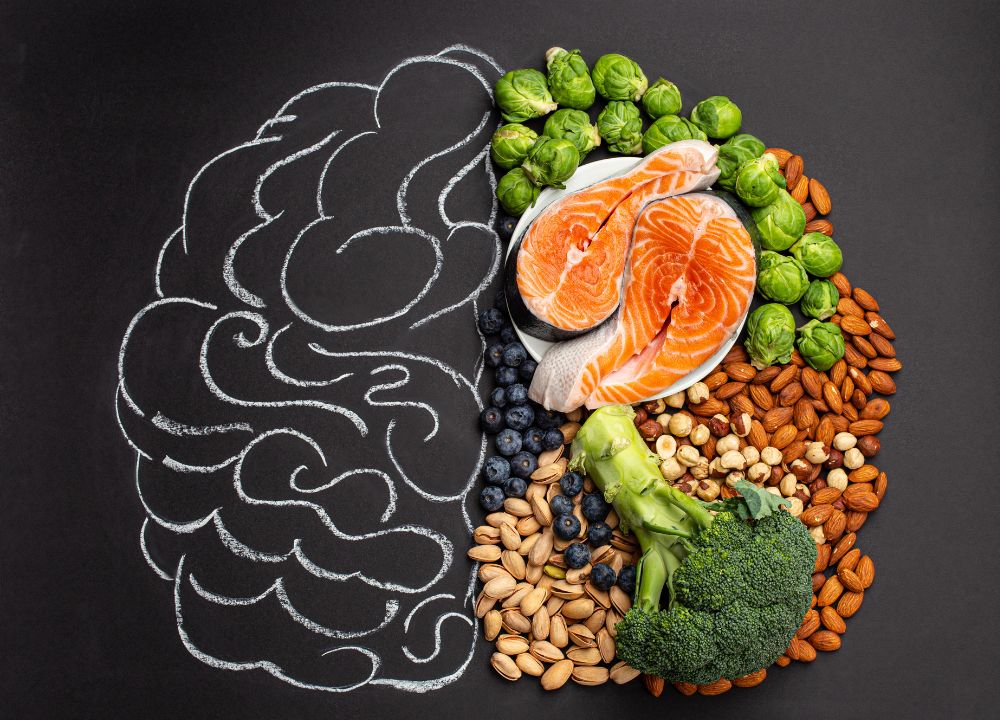
- Think: oats, chia, lentils, berries, leafy greens, beans, and sweet potatoes.
- Each plant counts toward your “gut diversity score.” More variety = better signaling to the brain.
2. Add Fermented Foods
- Include 1–2 servings daily: kefir, sauerkraut, kimchi, miso, yogurt, or tempeh.
- These naturally boost beneficial bacteria and reduce gut inflammation.
3. Manage Stress Before It Manages You
- Cortisol and gut health are intertwined.
- Use 5 minutes of breathwork, a short walk, or journaling post-workday to “close your stress loop.”
4. Sleep to Repair Your Gut Lining
- Melatonin supports both circadian rhythm and gut barrier integrity.
- Aim for consistent sleep and minimal late-night eating to reduce inflammation.
5. Simplify What You’re Asking Your Gut to Do
- Processed foods, alcohol, and excess caffeine all stress your digestive system.
- You don’t need perfection—just less chaos. The more your gut rests, the more your brain performs.
The Takeaway
You can’t separate mental performance from physical systems.
Your motivation, clarity, and resilience don’t just live in your head—they’re built in your gut.
Support that system with the same precision you bring to training or nutrition, and you’ll start to notice it:
More focus. More calm. More consistent energy.
Because when your gut and brain are on the same page, everything else follows.